How to Remove and Prevent Hard Water Stains on Glass Shower Doors
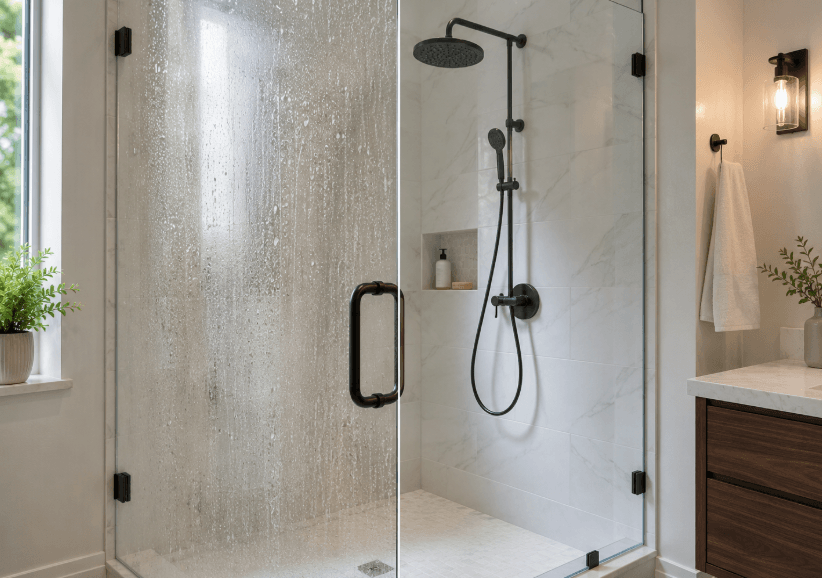
Much of the Chicago area, including many South Suburbs, has moderately hard tap water, which leaves mineral deposits onglass shower doors over time. Daily squeegeeing, a weekly non-abrasive glass cleaner, and a protective glass coating applied at installation are the most effective ways to prevent buildup. Existing hard water stains can usually be removed with a vinegar-based soak or a dedicated hard water glass cleaner, though heavily etched glass may need professional restoration or replacement.
Why Hard Water Is a Real Issue for Chicago Bathrooms
If you’ve noticed a cloudy, chalky film building up on your shower glass no matter how often you clean it, hard water is almost always the cause. Hard water contains higher levels of dissolved minerals, mainly calcium and magnesium. As water evaporates off your glass after every shower, those minerals stay behind, layer after layer, forming the white, spotty residue most homeowners just call “water spots.”
This isn’t unique to any one home — it’s a regional water-supply characteristic. Depending on your specific suburb and whether your water comes from Lake Michigan or a local well system, hardness levels vary, but a large share of homes throughout the Chicago area deal with this to some degree. Homes on well water in particular tend to see faster, heavier mineral buildup than homes on treated municipal supply.
What Hard Water Actually Does to Your Glass
There are two separate problems, and it’s worth knowing the difference because they’re treated differently:
Surface mineral deposits. This is the cloudy film sitting on top of the glass. It’s not damage to the glass itself — it’s a buildup that can be cleaned off, though it gets harder to remove the longer it’s left untreated.
Etching. If mineral deposits are left on glass for a long time, especially combined with soap residue and heat, they can start to chemically bond with the glass surface. At that point, you’re no longer looking at a cleaning problem — the glass itself has a permanently altered surface, and no amount of scrubbing will fully restore the original clarity. This is the difference between a stain you can clean and a stain that’s now part of the glass.
Knowing which one you’re dealing with matters because trying to scrub etched glass with abrasive pads or harsh acids won’t help, and can actually make the surface worse by scratching it.
How to Tell the Difference
A simple test: if the cloudy spots come off with a vinegar soak or a dedicated glass cleaner and the glass returns to a clear, glossy finish, you’re dealing with surface deposits. If the haze remains even after a thorough cleaning and the glass feels slightly rough or pitted when you run a finger over it (dry, and carefully), you’re likely looking at etching.
Preventing Hard Water Buildup
The most effective approach is prevention, since mineral deposits on your custom shower doors are far easier to stop from forming than to remove once they’ve set in.
Squeegee after every shower. This single habit removes the majority of standing water before it has a chance to evaporate and leave mineral deposits behind. It takes under a minute and is genuinely the single most effective thing you can do.
Use a weekly glass-safe cleaner. A non-abrasive, glass-specific cleaner used once a week prevents the slow buildup that daily squeegeeing alone might miss around edges and corners.
Apply a protective glass coating. A professionally applied hydrophobic glass coating creates a surface that water beads up on and slides off, rather than sitting and evaporating in place. This is typically applied at installation and can be reapplied periodically. It’s one of the most effective long-term defenses against hard water buildup in areas like ours.
Improve ventilation. Reducing humidity and moisture lingering in the bathroom after a shower (running a fan, cracking a window) reduces the amount of time water sits on the glass evaporating.
Removing Existing Hard Water Stains
If you’re already dealing with visible buildup, here’s the order of approaches to try, from gentlest to most aggressive:
- White vinegar soak. Soak a cloth or paper towel in white vinegar, press it against the affected glass for 15-30 minutes, then wipe and rinse. For heavier buildup, a spray bottle of equal parts vinegar and water left to sit for several minutes before wiping can help.
- Dedicated hard water glass cleaner. Products formulated specifically for hard water and soap scum (rather than general glass cleaner) are often more effective for established buildup.
- Non-abrasive scrub pad. For stubborn spots, a non-scratch scrub pad (never steel wool or abrasive powders) combined with either of the above can help lift remaining residue.
What to avoid: abrasive powders, steel wool, razor blades, and highly acidic commercial descalers used without dilution. These can scratch or damage the glass surface, sometimes making the cloudiness worse rather than better.
If none of these steps restore clarity, the glass is likely etched rather than simply stained, and cleaning alone won’t fix it.
When Cleaning Isn’t Enough: Restoration vs. Replacement
For lightly etched glass, professional glass polishing can sometimes reduce the appearance of etching, though it typically won’t fully reverse it. For heavily etched or long-neglected glass, replacement is usually the more practical option, especially if the door is original to an older home and may not be the best fit for your bathroom’s current layout anyway.
This is also a good opportunity to consider whether a glass coating and better daily habits would prevent the same issue from recurring on a new door.
Does Glass Type Make a Difference?
To some degree, yes. Low-iron (“ultra-clear”) glass doesn’t resist hard water any better on its own, but because it lacks the slight green tint of standard glass, mineral buildup tends to be more visible sooner — which can actually work in your favor, since it encourages catching and addressing buildup earlier rather than letting it accumulate unnoticed. Frosted or textured glass can sometimes hide early-stage water spots more easily, though buildup still needs the same maintenance over time. The bigger factor by far is the presence (or absence) of a protective coating and consistent squeegee habits, regardless of glass type.
People Also Ask
Protect Your Investment
A custom glass shower door is meant to last for years, and the biggest threat to that longevity in our area isn’t the glass itself — it’s what’s in the water. If you’re installing a new door, ask about our protective glass coating option during your free measurement visit. If you’re dealing with existing buildup or etching on a current door, our team can help you decide whether cleaning, restoration, or replacement makes the most sense for your bathroom.
Curious what a replacement would cost if your current glass is beyond saving? Check out our 2026 custom shower door pricing guide for a full breakdown by style and size.