Is Tempered Glass Required by Code for Shower Doors? What Illinois Homeowners Should Know
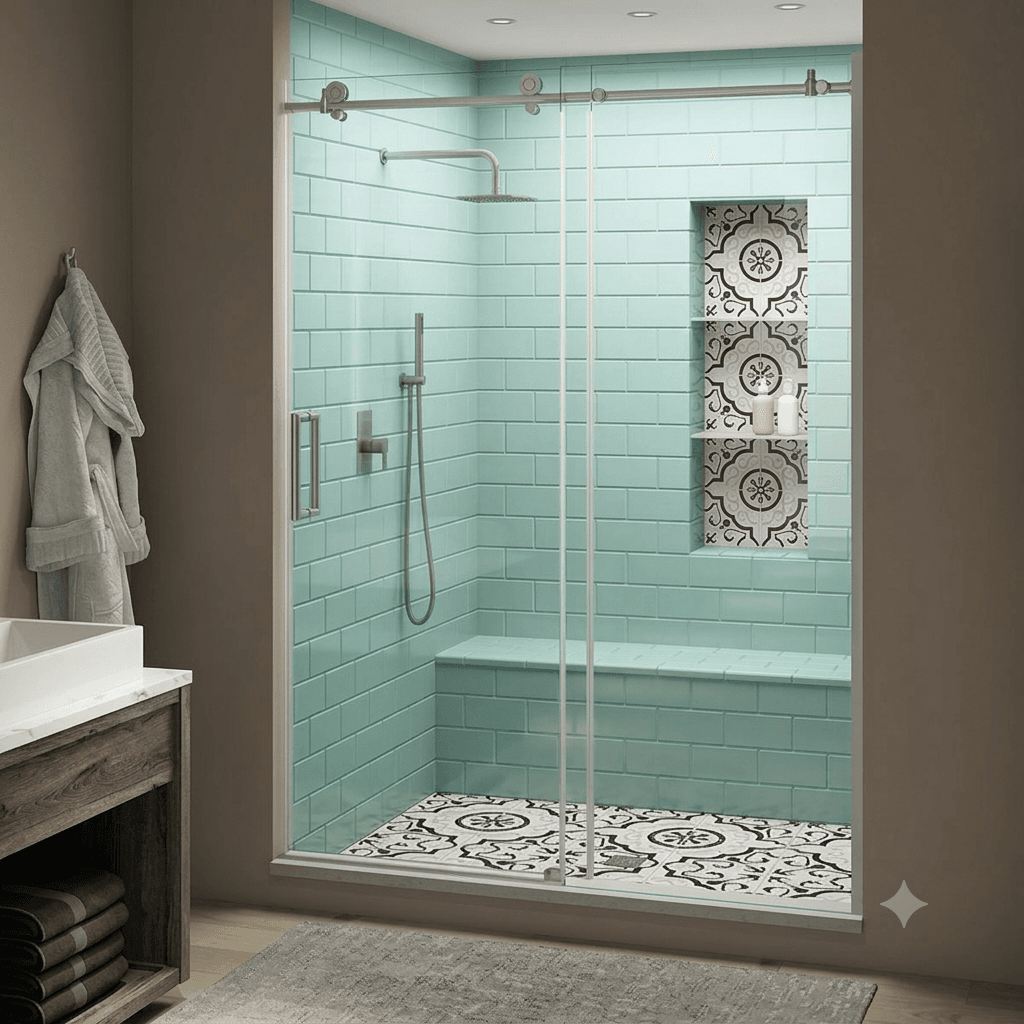
Anyone shopping for a shower door eventually runs into some version of the claim that “tempered glass is required by law.” That statement is close to accurate but not quite precise, and the difference matters more than it might seem, both for your safety and for knowing what to actually check before you buy glass from anyone.
Here is the more accurate version: building codes require safety glazing in and around showers and tubs. Tempered glass is the standard, common way the glass industry meets that requirement, but the code itself is written around a performance standard, not a specific product name. Understanding that distinction is useful, because it tells you what to actually verify rather than just taking someone’s word for it.
What the Code Actually Says
The International Residential Code, which Illinois jurisdictions build their local codes around, designates certain areas of a home as hazardous locations for glass, meaning locations where a person falling or bumping into glass is more likely and where broken glass poses a higher injury risk. Showers, tubs, and the areas immediately around them are explicitly named as hazardous locations under this code.
Specifically, glazing with its bottom edge less than 60 inches above the shower or tub floor, and glazing within 60 inches horizontally of the water’s edge, is required to be safety glazing. In plain terms, that covers essentially every piece of glass that makes up a shower or tub enclosure, door and fixed panels alike.
What the code requires is that this glazing meet one of two recognized safety standards, tested for impact resistance and breakage behavior, not that it specifically be a product labeled tempered glass. In practice, tempered glass is by far the most common way manufacturers and fabricators meet this standard for shower enclosures, which is why the two get used somewhat interchangeably in casual conversation. But the underlying requirement is about performance, not a specific manufacturing process.
What Tempered Glass Actually Is
Tempered glass is glass that has been heated to a high temperature and then rapidly cooled, which locks the outer surface into a state of compression while the interior remains in tension. This process makes the finished glass several times stronger than ordinary annealed glass of the same thickness, and critically, it changes how the glass fails. Where standard glass breaks into large, sharp shards, tempered glass breaks into small, relatively blunt pieces across the entire pane. That breakage pattern is exactly why it is the preferred way to meet safety glazing requirements in a wet, high-contact area like a shower.
This is also why tempered glass cannot be cut, drilled, or altered after the tempering process. The compression that makes it strong and safe is locked into the glass at a specific size and shape. Any attempt to cut or drill it afterward releases that stored stress and shatters the entire panel. Every measurement, every hole for a hinge or handle, and every notch around a bench or curb has to be finished before the glass goes through the tempering oven, which is the reason accurate on-site measurement happens before fabrication, not after.
Laminated Glass: The Other Compliant Option
Laminated glass, which sandwiches a plastic interlayer between two bonded panes of glass, also meets safety glazing standards and is a recognized alternative to tempered glass in hazardous locations. When laminated glass breaks, the interlayer holds the pieces together instead of the pane coming apart entirely, which is useful in applications where you want the glazing to stay in place even after a break, such as overhead glazing or certain guard rail situations.
For a standard shower or tub enclosure, tempered glass is the far more common choice, largely because it is lighter, more cost effective at the thicknesses used in shower doors, and well suited to an application where the glass does not need to remain in place after breaking, it simply needs to fail safely. Laminated glass shows up more often in our work on stair and balcony railings and specialty applications, which our glass walls and panels page covers in more detail.
How to Confirm the Glass You Are Getting Is Actually Compliant
Compliant safety glazing is required to carry a permanent certification mark, etched or stamped directly into the glass itself, typically in a corner of the panel. This mark identifies the manufacturer, the glass type, and the standard it meets. It cannot be a sticker that peels off or a claim on an invoice. It has to be permanently marked on the glass.
- Look for the etched mark. On an installed door or panel, check the corners for a small, permanently etched logo or text. This is your confirmation the panel is genuinely certified safety glazing, not just glass that happens to look similar.
- Ask before you buy, not after. Any legitimate fabricator should be able to tell you plainly what standard their glass meets and should have no hesitation showing you the certification mark on a finished panel.
- Be cautious with secondhand or unknown-origin glass. This is one of the real risks with installing glass salvaged from another location or purchased without documentation. If there is no certification mark and no way to verify its history, there is no way to confirm it meets code, regardless of how sturdy it looks.
This is also why we are cautious about install-only jobs on glass fabricated by someone else. We can inspect a panel and tell you whether it is certified and install-ready, but we cannot vouch for glass we did not fabricate ourselves. More on that on our shower door fabrication and installation page.
Why This Matters Beyond Just Following the Rules
Code requirements around glazing exist because of real injury patterns, people slipping in wet bathrooms and falling into glass, or a panel failing under normal use in a high-contact area. A shower is one of the more physically demanding environments glass exists in inside a typical home: constant moisture, frequent contact, and a location where a fall is genuinely more likely than almost anywhere else in the house.
Beyond the legal requirement, this is simply the right way to build a shower enclosure regardless of what any specific code says. Every panel we fabricate, whether for a frameless enclosure, a semi-frameless enclosure, or a sliding door, is tempered safety glass, certified and permanently marked, because that is the standard for this application, not because a code inspector might check.
Questions to Ask Before Any Shower Glass Project
- What standard does the glass meet, and will the finished panel carry a permanent certification mark?
- Is the glass being fabricated specifically for this opening, or is it a stock size being fitted to your space?
- If any part of the panel needs a notch, hole, or custom cut, has that been accounted for before tempering, since it cannot be added afterward?
If you are planning a new enclosure or replacing existing glass anywhere in the greater Chicago area, we are glad to walk through exactly what glass and certification your project will use before anything is fabricated. Call or text (708) 808-7775 for a free, no obligation on-site estimate.