
Shower Door Hardware and Finish Guide: Hinges, Handles, and Matching Your Fixtures
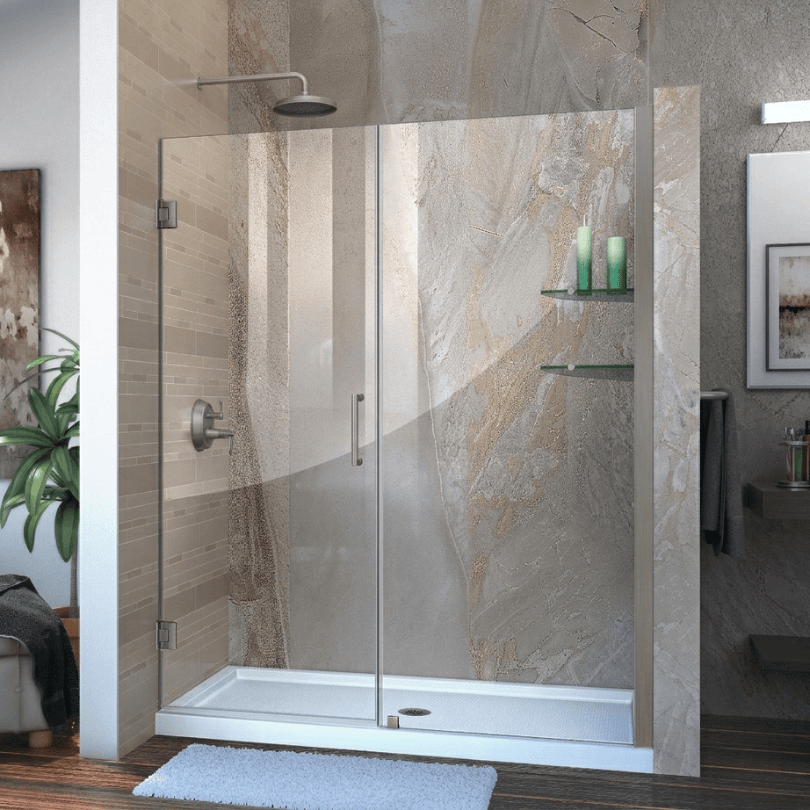
Most conversations about a new shower door focus on the glass, frameless versus semi-frameless, thickness, edge finish. Hardware often gets treated as an afterthought, picked at the very end almost as a formality. That is a mistake, because hardware does the actual structural work of holding the door up and keeping it functioning years down the road, and the finish you choose is one of the most visible design decisions in the entire bathroom. This guide covers what each piece of hardware actually does and how to think through finish selection.
Hinges: The Component Doing the Real Work
On a hinged frameless or semi-frameless door, the hinges are not just a design detail, they are the entire structural connection between a heavy glass panel and the wall or an adjacent fixed panel. A standard frameless door in 3/8 or 1/2 inch glass can weigh 75 to 100 pounds, and that full weight, plus the leverage created every time the door swings, is carried by just two or three hinge points.
- Wall-mounted hinges attach the door directly to the wall and require solid backing, studs or blocking installed before tile, behind the mounting location. This is the most common configuration for a standalone shower door.
- Glass-to-glass hinges connect the door to an adjacent fixed glass panel instead of the wall. These are useful when wall backing is not available or when the layout calls for a door set between two panels rather than at the wall.
Hinge count and placement are determined by door size and weight, not personal preference. A taller or heavier door needs three hinges rather than two to distribute the load properly. This is one of several reasons an accurate on-site measurement and structural assessment matters before any hardware is ordered.
Clamps: The Hardware Behind Fixed Panels
Fixed panels, meaning glass that does not open, are typically held in place with clamps rather than hinges, since there is no swinging motion to accommodate. Clamps grip the glass edge and secure it to the wall or to an adjacent panel, and they come in a range of styles from a minimal, low-profile square clamp to a more decorative round or oval design.
Clamp placement affects both the strength of the installation and the look of the finished panel, since clamps are visible hardware sitting directly on the glass surface. Fewer, well-placed clamps generally read as more modern and minimal, while more clamps distribute the load across more points, which can matter on a taller or wider panel.
Handles: Function First, Then Style
Shower door handles come in a few basic categories, and the right choice depends more on how the door will actually be used than on style alone.
- Knob handles are compact and minimal, a good fit for a smaller door or a design that wants the least amount of visible hardware possible. They require more grip strength to operate than a bar handle.
- Pull bar handles run vertically or diagonally across the door and are easier to grip, especially with wet hands. This is generally the better choice for households prioritizing ease of use, and it doubles as a design element that can visually anchor the door.
- Ladder-style handles are a longer, multi-rung pull bar, often used on wider sliding doors where a single short handle would be awkward to reach depending on where the door happens to be positioned along the track.
Handle length and placement should also account for who is using the shower daily. A shorter household member or anyone with limited reach benefits from a handle mounted lower or a full-length pull bar rather than a handle positioned for an average adult reach. For a household planning around long-term mobility needs, our post on accessible shower glass for aging in place covers handle and layout choices in more detail.
Track Hardware on Sliding Doors
Sliding doors add rollers and a track to the hardware list, and the quality of these components has a direct effect on how the door feels to use for years, not just on day one. Rollers with sealed bearings resist the buildup and wear that cause a door to stick or jump the track, which is one of the most common service calls we get on sliding enclosures. Our shower door repair services page covers what causes sliding doors to drag or bind if you are dealing with that issue on an existing door.
Top-hung sliding systems, where the door hangs from an overhead track instead of riding in a bottom channel, eliminate the bottom track that collects soap film and hard water buildup, which is worth considering specifically in households that want to minimize maintenance.
Matching Finish to the Rest of the Bathroom
Shower door hardware is available in the same common finishes used across plumbing fixtures, which makes matching your existing faucet, shower valve trim, and towel bars straightforward in most cases.
- Chrome remains the most common and versatile finish, pairing with nearly any fixture set and generally the most affordable option.
- Brushed nickel offers a warmer, less reflective look than chrome and is a common choice for a transitional or slightly softer bathroom design.
- Matte black has become one of the most requested finishes in recent years, reading as modern and providing strong visual contrast against clear glass.
- Brushed gold brings warmth and a more traditional or luxury feel, and pairs well with warmer tile and stone selections.
The exception is less common or proprietary finishes, such as a specific fixture brand’s designer bronze or a discontinued color line. An exact match may not exist in shower door hardware even when it is visually close, and in that case the honest answer is to show you the closest available option rather than promise a perfect match that is not possible. Bringing a photo of your existing faucet or shower valve trim to the measurement visit is the fastest way to confirm what will actually match before anything is ordered.
Hardware Considerations by Enclosure Type
Different enclosure types lean on different hardware, so it is worth thinking about hardware alongside enclosure choice rather than after it. Our frameless shower doors page and semi-frameless shower doors page both go into how each style’s framing, or lack of it, affects the hardware options available, which is useful background if you have not settled on an enclosure type yet.
Getting Hardware Right the First Time
Hardware is not something to finalize as an afterthought once the glass is already decided. Door weight, swing direction, handle placement, and finish all interact with the enclosure type and the specific opening, and getting them right depends on an accurate on-site assessment rather than a catalog selection made in isolation.
We walk through hardware options as part of every measurement visit, including finish matching against your existing fixtures, so the finished door works the way it should and looks like it belongs in the room. We serve homes throughout the greater Chicago area. Call or text (708) 808-7775 for a free, no obligation estimate.